Water damage restoration
Water Damage Restoration in Columbus, OH
A burst supply line, an overflowing tub, a failed water heater or water through the ceiling. Call and you are connected with an independent restoration contractor that works in Columbus.
What restoration actually involves
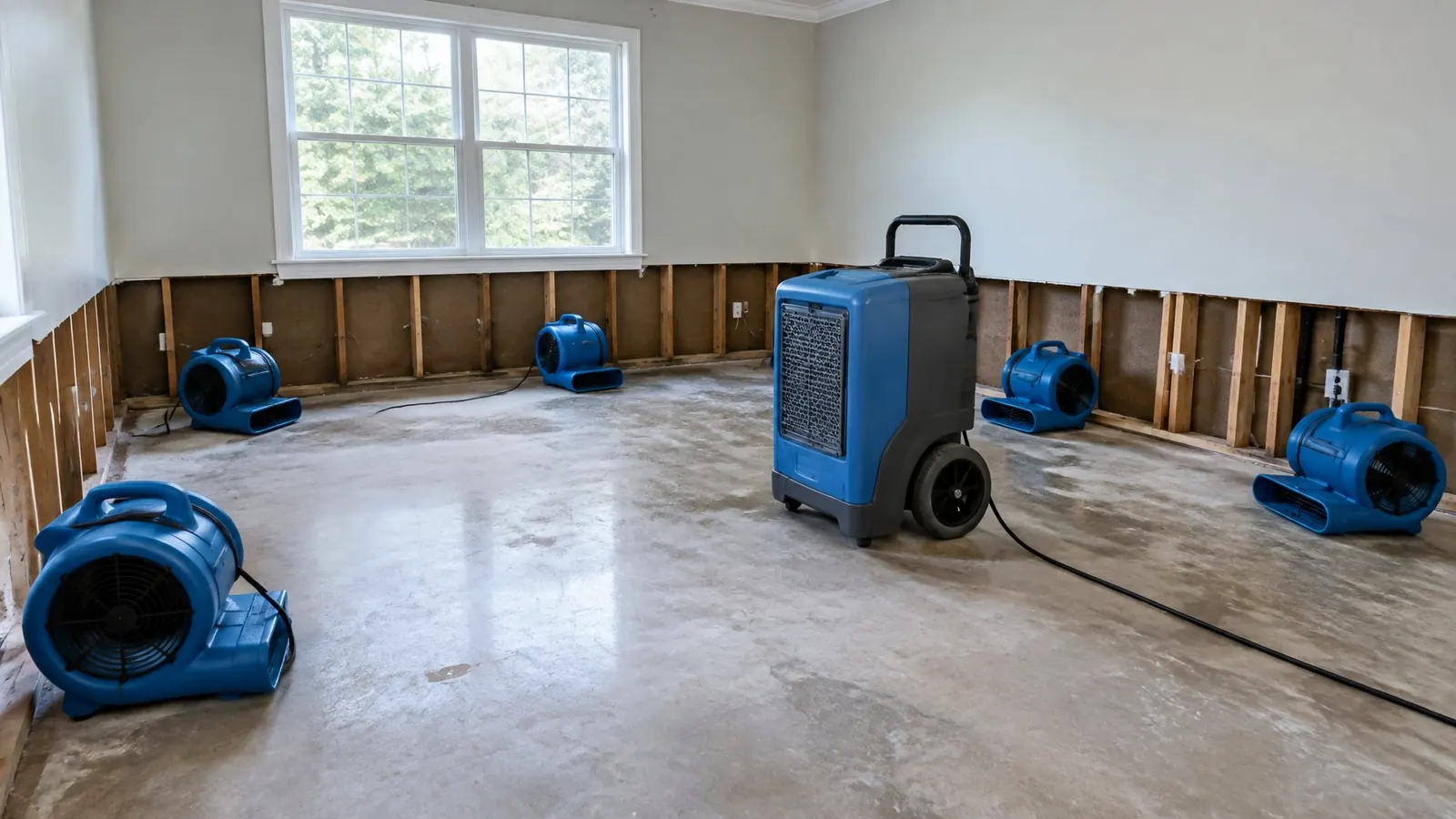
Water damage restoration has three stages. First the source is stopped and standing water is extracted. Then the structure is dried: air movers push air across wet surfaces and dehumidifiers pull the moisture out of the room, while the contractor checks walls, floors and framing with moisture meters until they reach normal readings. Only then are damaged materials repaired or replaced.
Drying is the stage people underestimate. Drywall, carpet pad, subfloor and wood framing hold water long after the floor looks dry, and trapped moisture is what leads to swelling, odor and mold. A good contractor documents the readings each day and tells you when the equipment can come out.
What to ask the contractor
Where the water came from
Clean supply water, gray water from an appliance or sewage each calls for a different approach. Tell them the source.
What gets removed
Wet carpet pad, baseboards and the lower part of drywall are often cut out so walls can dry. Ask what is being removed and why.
How dryness is measured
Moisture readings on a written log, taken daily, show when the job is actually dry rather than just looking dry.
Equipment and power
Air movers and dehumidifiers run day and night for several days. Ask how many units and whether any circuits will be busy.
Photos and records
Before-and-after photos and the moisture log are useful for your own records and for any insurance discussion you have.
Who does the rebuild
Some contractors dry and rebuild; others only dry. Ask now so you know who replaces drywall, flooring and trim.
Not all water is the same
Clean, gray and black water
Restoration contractors sort water by how contaminated it is, following the industry's IICRC S500 standard. The category decides what can be dried and what has to go.
Clean water
From a clean source, such as a burst supply line, a leaking water heater or an overflowing sink with no soap or waste.
- Usually dried in place
- Carpet can sometimes be saved
- Turns into category 2 if it sits
Gray water
Water with some contamination, such as dishwasher or washing machine discharge, or a toilet overflow with urine but no feces.
- Cleaned and treated, then dried
- Carpet pad usually replaced
- Turns into category 3 if it sits
Black water
Grossly contaminated water: sewage, a toilet backflow from beyond the trap, or flood water from rivers and streams.
- Porous materials removed
- Surfaces cleaned and sanitized
- Keep people and pets away
In Columbus
Permits and contractor licenses in Columbus
Repairs after water damage can need a permit in Columbus. The city's typical residential projects sheet lists drywall replacement of more than 32 square feet as needing a permit and plan review, while new flooring, painting and cabinets need none. Building and Zoning Services is at 111 N Front Street, 614-645-7433.
Contractors working in the city need a city license or registration before they pull permits, and those doing structural work on one- to three-family homes must be licensed as a City of Columbus home improvement contractor (city contractor licenses). The city FAQ explains you can't buy a permit yourself for work you are hiring a contractor to do, and how to search for a contractor in its Citizen Access Portal.
How it works
From the call to a dry house
You call
Tell the person who answers what happened, where the water or smoke came from and your ZIP code.
You're connected
The call goes to an independent restoration contractor that serves your part of Columbus.
They assess
The contractor inspects, measures moisture, explains what needs removing and gives you their price.
You decide
Hire them or not. There is no obligation, and the agreement is between you and the contractor.
Questions
Water Damage Restoration: common questions
How long does drying take?
Often around three to five days of equipment running for a typical room with clean water, longer for basements, hardwood floors, plaster walls or water that sat for a while. The moisture readings, not the calendar, decide when drying is finished.
Can I dry it myself with fans?
Small spills on hard floors, yes. Once water has soaked into carpet pad, drywall or a subfloor, household fans rarely dry it fully, and hidden moisture can lead to mold. A contractor's moisture meter tells you what is still wet.
Should I turn off the power?
If water is near outlets, cords or the electrical panel, or the panel is in a wet basement, don't walk into the water. Turn off power at the breaker only if you can reach it from a dry spot; otherwise call the utility or an electrician first.
Other services
Other kinds of damage
- Flooded Basement CleanupStorm water, a failed sump pump or seepage: water pumped out, contents moved, the basement dried.
- Frozen & Burst PipesA pipe split in the cold or a supply line let go: water off, extracted and the walls and floors dried.
- Sewage Backup CleanupSewage through a floor drain or toilet: contaminated materials removed, the area cleaned, sanitized and dried.
- Water Extraction & DryingPumps and extractors take up standing water; air movers and dehumidifiers dry the structure, checked daily.
- Storm & Roof Leak DamageRain through the roof, ice dams or wind-driven water: ceilings, walls and insulation dried or replaced.
- Fire & Smoke DamageSoot, smoke odor and the water used to put the fire out: cleaned, deodorized, dried and rebuilt.
- Mold RemediationMold after a leak or flood: the moisture source fixed, the area contained, moldy materials removed.
Water, smoke or mold?
Talk to a Columbus restoration contractor
One call connects you with an independent restoration contractor serving Columbus and nearby suburbs. Tell them what happened, where the water came from and how long it has been wet.
Water in the house? Talk to a restoration contractor now.
You are connected with an independent water damage restoration contractor that serves your part of central Ohio.
Call (380) 214-0333Calls may be recorded. See the referral disclosure and privacy policy.